Tag Archive 'Sovereignty'

Feb 18 2014

Biblical Middle Knowledge

The Bible clearly indicates God’s knowledge of counterfactuals (i.e., the description of a consequent based upon an antecedent that does not occur). For example, the statement, If you do A(ntecedent) act, then C(onsequent) result will occur. Then, you decide to not perform A(ntecedent) act.

Some denote this as middle knowledge, others reject the name.

Many rejectors do so based upon Luis de Molina’s view that the counterfactual acts would be done with, what would be considered, libertarian free will. Others such as Bruce Ware, John Frame and Terrence Thiessen will use the name, but consider the freedom of the individual to be other than libertarian freedom, such as Freedom of Inclination (Bruce Ware). Nevertheless, the concept of God’s knowledge of counterfactuals is shown in the Bible. For example, the LORD often tells Israel that she lost blessings due to her disobedience, or that she would have been blessed if she had obeyed. These are counterfactuals. Following are a few other specific ones:

Exodus 13:17 NKJV – Then it came to pass, when Pharaoh had let the people go, that God did not lead them by way of the land of the Philistines, although that was near; for God said, “Lest perhaps the people change their minds when they see war, and return to Egypt.

God indicates that if He had led the Israelites a certain way then they would have changed their minds. So, He does not lead them that way.

1 Samuel 23:8-14 NKJV – Then Saul called all the people together for war, to go down to Keilah to besiege David and his men. When David knew that Saul plotted evil against him, he said to Abiathar the priest, “Bring the ephod here.” Then David said, “O LORD God of Israel, Your servant has certainly heard that Saul seeks to come to Keilah to destroy the city for my sake. “Will the men of Keilah deliver me into his hand? Will Saul come down, as Your servant has heard? O LORD God of Israel, I pray, tell Your servant.” And the LORD said, “He will come down.” Then David said, “Will the men of Keilah deliver me and my men into the hand of Saul?” And the LORD said, “They will deliver you.” So David and his men, about six hundred, arose and departed from Keilah and went wherever they could go. Then it was told Saul that David had escaped from Keilah; so he halted the expedition. And David stayed in strongholds in the wilderness, and remained in the mountains in the Wilderness of Ziph. Saul sought him every day, but God did not deliver him into his hand.

David asks what will happen if he does certain things and the LORD confirms the consequent result. Since, David did not want the result, David chooses a different act, and the result that God confirmed would have happened, does not happen.

Jeremiah 23:21-22 NKJV – “I have not sent these prophets, yet they ran. I have not spoken to them, yet they prophesied. But if they had stood in My counsel, And had caused My people to hear My words, Then they would have turned them from their evil way And from the evil of their doings.

Matthew 11:21-24 NKJV – “Woe to you, Chorazin! Woe to you, Bethsaida! For if the mighty works which were done in you had been done in Tyre and Sidon, they would have repented long ago in sackcloth and ashes. But I say to you, it will be more tolerable for Tyre and Sidon in the day of judgment than for you. And you, Capernaum, who are exalted to heaven, will be brought down to Hades; for if the mighty works which were done in you had been done in Sodom, it would have remained until this day. “But I say to you that it shall be more tolerable for the land of Sodom in the day of judgment than for you.

1 Corinthians 2:8 NKJV – which none of the rulers of this age knew; for had they known, they would not have crucified the Lord of glory.

So, we should come away from this with at least two bits of information:

  1. God not only knows counterfactuals, but declares them in Scripture
  2. When we are discussing the issue with someone, we must ascertain whether they are including libertarian free will as part of the definition of middle knowledge.

Comments Off on Biblical Middle Knowledge
Jun 15 2012

Are All Things Decreed by God?

Filed under God,Sovereignty

There is a certain view in theology that believes God decrees every event that has or will occur. This view is taken from verses such as the following:

(Eph 1:11 ESV) In him we have obtained an inheritance, having been predestined according to the purpose of him who works all things according to the counsel of his will,

Granted that Ephesians 1:11 does indicate that God works all things to His purpose and according to the counsel of His will.  But, is it the same to say “that God works all things” and ” that God decrees all things.”  I have to say quite unequivocally “NO!”  The reason is nothing less than the Word of God.  Let’s take a look at these verses.

(Jer 19:3-6 ESV) 3You shall say, ‘Hear the word of the LORD, O kings of Judah and inhabitants of Jerusalem. Thus says the LORD of hosts, the God of Israel: Behold, I am bringing such disaster upon this place that the ears of everyone who hears of it will tingle. 4Because the people have forsaken me and have profaned this place by making offerings in it to other gods whom neither they nor their fathers nor the kings of Judah have known; and because they have filled this place with the blood of innocents, 5and have built the high places of Baal to burn their sons in the fire as burnt offerings to Baal, which I did not command or decree, nor did it come into my mind– 6therefore, behold, days are coming, declares the LORD, when this place shall no more be called Topheth, or the Valley of the Son of Hinnom, but the Valley of Slaughter.

(Jer 7:30-31 ESV) 30“For the sons of Judah have done evil in my sight, declares the LORD. They have set their detestable things in the house that is called by my name, to defile it. 31And they have built the high places of Topheth, which is in the Valley of the Son of Hinnom, to burn their sons and their daughters in the fire, which I did not command, nor did it come into my mind.

(Jer 32:35 ESV) They built the high places of Baal in the Valley of the Son of Hinnom, to offer up their sons and daughters to Molech, though I did not command them, nor did it enter into my mind, that they should do this abomination, to cause Judah to sin.

How do we explain these apparent differences?  Well, I can only surmise that when the word tells us “God ordains something,” there is a difference than to say “God decrees something.”  The explanation might be in our concept of what God’s sovereignty means.  Theology recognizes a “meticulous sovereignty” versus a more “general sovereignty.”   C. Michael Patton has provided a detailed analysis of at least four views of the sovereignty of God, at his Parchment and Pen blog.  Maybe our difference is properly explained in the differentiations noted therein.

  1. Meticulous sovereignty: God is the instrumental cause behind every action and reaction there has ever been. For this view, in order for God to be truly sovereign, he must be the ultimate and instrumental cause for everything, including sin.
  2. Providential sovereignty: God is bringing about his will in everything (Eph 1:11). However,  his will is not the instrumental cause of all that happens. God’s will plays a providential role in “causing” all things, using secondary causes as instruments. What God wills is not always what he would want in a perfect world, but all he has is sin to work with. Therefore, in this sense, even evil is the will of God.
  3. Providential oversight: Here God’s sovereignty is expressed in active oversight. He has a general plan, but is not married to the details. God can and often does intervene in the affairs of humanity to bring about his purpose. In this case he never “wills” evil; he only uses it.
  4. Influential oversight: Here God limits his own sovereignty. God could control things, but to preserve human freedom, he will not intervene in the affairs of men to the degree that human freedom is effected. He is hopeful that his influence will be persuasive to change a person’s heart or to guide them to his will. Here God never wills evil, but only allows it.

Comments Off on Are All Things Decreed by God?

May 22 2012

Divine Control of Man

Filed under God,Sovereignty,Theology

Following are some of the Biblical references noted in the Thompson Chain Reference Bible under the heading:


Control, Divine:

  • Manifested in the Control of Men
    • 2 Kings 19:28
    • Job 12:19
    • Proverbs 21:1
    • Isaiah 37:29
    • Isaiah 44:25
    • Ezekiel 29:4
    • Ezekiel 38:4
    • Ezekiel 39:2

Here are some additional verses that apply that were not included in Thompson:

  • Genesis 11:9
  • Exodus 14:4
  • Psalm 37:23
  • Proverbs 16:9
  • Isaiah 40:23
  • Jeremiah 15:11; 16:21; 17:4
  • Revelation 17:17


Comments Off on Divine Control of Man

Apr 24 2012

Tyndale on the Power of the Scriptures

The following is taken from William Tyndale’s Prologue to his New Testament translation printed in 1525 A.D. As shown, William Tyndale held a very strong view of God’s sovereignty in the salvation of believers.

When the evangelion is preached, the Spirit of God entereth into them which God hath ordained and appointed unto eternal life; and openth their inward eyes, and worketh such belief in them.

Comments Off on Tyndale on the Power of the Scriptures

Feb 17 2012

God's Sovereignty: A Definition

Filed under God,Sovereignty

Here is a definition of God’s sovereignty that I felt was particularly provocative.

God’s right to do whatever He pleases, whenever He pleases, to whomever He pleases, without seeking anyone’s permission.

Here are some supporting Scriptures:
Psalm 135:6; Isaiah 14:27; Isaiah 40:22; Isaiah 46:9-10; Daniel 4:34-37; Psalm 115:3; Psalm 33:8-11; Isaiah 10:5-34; Isaiah 41:21-23; Proverbs 21:1; Jeremiah 18:4-6;

Comments Off on God's Sovereignty: A Definition

Jan 30 2009

Favorite Books 1

Filed under Books,God,Sovereignty

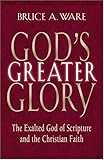
God’s Greater Glory by Bruce A. Ware is one of my favorite theological books. Seemingly written as a response to Open Theism, I found it much more profound. I enjoyed very much the discussion on libertarian freedom versus freedom of inclination. In addition, the discussion of compatibilist middle knowledge versus libertarian middle knowledge was thought provoking.

I also enjoyed his discussion of spectrum texts (p. 69 ff) demonstrating God’s comprehensive sovereign control.

These are passages that indicate in sweeping language that God controls both sides of the spectrum of life’s occurrences, both those actions and events considered pleasant and good and those considered harmful and evil.

Here are some of the spectrum texts that Dr. Ware lists in the book.

“See now that I, even I, am he,
and there is no god besides me;
I kill and I make alive;
I wound and I heal;
and there is none that can deliver out of my hand”
(Deut. 32:39).

“The LORD kills and brings to life;
he brings down to Sheol and raises up.
The LORD makes poor and makes rich;
he brings low and he exalts” (1 Sam 2:6-7).

Consider the work of God: who can make straight what he has made crooked? In the day of prosperity be joyful, and in the day of adversity consider: God has made the one as well as the other, so that man may not find out anything that will be after him (Eccles. 7:13-14).

“I am the LORD, and there is no other, besides me there is no God; I equip you, though you do not know me, that people may know, from the rising of the sun and from the west, that there is none besides me; I am the LORD, and there is no other. I form light and create darkness, I make well-being and create calamity, I am the LORD, who does all these things.” (Isa. 45:5-7).

Who has spoken and it came to pass, unless the Lord has commanded it? Is it not from the mouth of the Most High that good and bad come? (Lam. 3:37-38).

Let all the earth fear the LORD;
let all the inhabitants of the world stand in awe of him!
For he spoke, and it came to be;
he commanded, and it stood firm.

The LORD brings the counsel of the nations to nothing;
he frustrates the plans of the peoples.
The counsel of the LORD stands forever,
the plans of his heart to all generations.
Psalm 33:8-11

for his [God’s] dominion is an everlasting dominion, and his kingdom endures from generation to generation; all the Inhabitants of the earth are accounted as nothing, and he does according to his will among the host of heaven and among the inhabitants of the earth; and none can stay his hand or say to him, ‘What have you done’? (Dan. 4:34b-35).

“And he made from one man every nation of mankind to live on all the face of the earth, having determined allotted periods and the boundaries of their dwelling place” (Acts 17:26).

Comments Off on Favorite Books 1