Archive for the 'God' Category

Feb 10 2009

To God Be the Glory

Filed under God

God is jealous of His glory. Here are some of the verses that speak of His glory.

For of Him and through Him and to Him are all things, to whom [be] glory forever. Amen. – Romans 11:36 NKJV

to Him [be] glory in the church by Christ Jesus to all generations, forever and ever. Amen. – Ephesians 3:21 NKJV

And the Lord will deliver me from every evil work and preserve [me] for His heavenly kingdom. To Him [be] glory forever and ever. Amen! – 2 Timothy 4:18 NKJV

If anyone speaks, [let him] [speak] as the oracles of God. If anyone ministers, [let him do it] as with the ability which God supplies, that in all things God may be glorified through Jesus Christ, to whom belong the glory and the dominion forever and ever. Amen. – 1 Peter 4:11 NKJV

To Him [be] the glory and the dominion forever and ever. Amen. – 1 Peter 5:11 NKJV

but grow in the grace and knowledge of our Lord and Savior Jesus Christ. To Him [be] the glory both now and forever. Amen. – 2 Peter 3:18 NKJV

and has made us kings and priests to His God and Father, to Him [be] glory and dominion forever and ever. Amen. – Revelation 1:6 NKJV

And every creature which is in heaven and on the earth and under the earth and such as are in the sea, and all that are in them, I heard saying: “Blessing and honor and glory and power [Be] to Him who sits on the throne, And to the Lamb, forever and ever!” – Revelation 5:13 NKJV

Here is a link to Torreys New Topical Textbook entry for this subject.

Comments Off on To God Be the Glory
Feb 02 2009

Extent of the Atonement

Dr. Bruce Ware postulates a position on the extent of the atonement which he calls Un/limited Atonement or Multiple Intentions View . Dr. Ware represents this as the Four Point Calvinist Position.

God’s intentions in the death of Christ are complex not simple, multiple not single:

  1. Christ died for the purpose of securing the sure and certain salvation of his own, his elect (John 10:11, 15; Eph. 5:25).
  2. Christ died for the purpose of paying the penalty for the sin of all people making it possible for all who believe to be saved (1 Tim 4:10; 1 John 2:2; 2 Cor. 5:14-15).
  3. Christ died for the purpose of securing the bone fide offer of salvation to all people everywhere (Matt. 28:18-20; Acts 1:8; John 6:35, 40; Rom 10:13).
  4. Christ died for the purpose of providing an additional basis for condemnation for those who hear and reject the gospel that has been genuinely offered to them (2 Pet 2:1; John 3:18b).
  5. Christ died for the purpose of reconciling all things to the Father (Rom. 8:20-23; 1 Cor. 15:24-28; Col. 1:19-20).


Comments Off on Extent of the Atonement

Jan 30 2009

Favorite Books 1

Filed under Books,God,Sovereignty

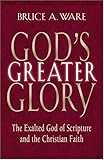
God’s Greater Glory by Bruce A. Ware is one of my favorite theological books. Seemingly written as a response to Open Theism, I found it much more profound. I enjoyed very much the discussion on libertarian freedom versus freedom of inclination. In addition, the discussion of compatibilist middle knowledge versus libertarian middle knowledge was thought provoking.

I also enjoyed his discussion of spectrum texts (p. 69 ff) demonstrating God’s comprehensive sovereign control.

These are passages that indicate in sweeping language that God controls both sides of the spectrum of life’s occurrences, both those actions and events considered pleasant and good and those considered harmful and evil.

Here are some of the spectrum texts that Dr. Ware lists in the book.

“See now that I, even I, am he,
and there is no god besides me;
I kill and I make alive;
I wound and I heal;
and there is none that can deliver out of my hand”
(Deut. 32:39).

“The LORD kills and brings to life;
he brings down to Sheol and raises up.
The LORD makes poor and makes rich;
he brings low and he exalts” (1 Sam 2:6-7).

Consider the work of God: who can make straight what he has made crooked? In the day of prosperity be joyful, and in the day of adversity consider: God has made the one as well as the other, so that man may not find out anything that will be after him (Eccles. 7:13-14).

“I am the LORD, and there is no other, besides me there is no God; I equip you, though you do not know me, that people may know, from the rising of the sun and from the west, that there is none besides me; I am the LORD, and there is no other. I form light and create darkness, I make well-being and create calamity, I am the LORD, who does all these things.” (Isa. 45:5-7).

Who has spoken and it came to pass, unless the Lord has commanded it? Is it not from the mouth of the Most High that good and bad come? (Lam. 3:37-38).

Let all the earth fear the LORD;
let all the inhabitants of the world stand in awe of him!
For he spoke, and it came to be;
he commanded, and it stood firm.

The LORD brings the counsel of the nations to nothing;
he frustrates the plans of the peoples.
The counsel of the LORD stands forever,
the plans of his heart to all generations.
Psalm 33:8-11

for his [God’s] dominion is an everlasting dominion, and his kingdom endures from generation to generation; all the Inhabitants of the earth are accounted as nothing, and he does according to his will among the host of heaven and among the inhabitants of the earth; and none can stay his hand or say to him, ‘What have you done’? (Dan. 4:34b-35).

“And he made from one man every nation of mankind to live on all the face of the earth, having determined allotted periods and the boundaries of their dwelling place” (Acts 17:26).

Comments Off on Favorite Books 1

Jan 28 2009

Decrees of God

Following are the generally recognized systems that define the decretive work of God. The first two are generally considered to be Reformed.

Supralapsarian (Before the Fall)

  1. God’s decree to glorify Himself through the election of some to salvation and some to reprobation.
  2. God’s decision to create the universe.
  3. God decrees the fall into sin.
  4. God’s decision to provide a savior for the elect in the mediatorial work of Christ.

Note: in the supralapsarian system:

  • The elective work is before the decree of the fall into sin.
  • God’s decretive will begins with predestination.
  • Election and reprobation are God’s primary work prior to creation.
  • The 2nd-4th decrees are means toward realization of the 1st. Creation is for the sake of election and damnation. The fall serves God’s elective purpose.
  • This decretive order seems to suggest that God is responsible for the fall since some humans are created expressly for damnation.

Much of the Reformed Church do not hold to this system of decrees developed by Theodore Beza. Generally, they hold to infralapsarianism.

Infralapsarian (After the Fall)

  1. God’s decision to create the world.
  2. God’s decision to allow man to fall into sin through his own self-determination.
  3. God decrees to elect some to salvation in Jesus Christ.
  4. God determines to pass by and leave the non-elect to their just fate and condemnation.

Note: in the inralapsarian system:

  • The elective work is after the decision to allow the fall into sin.
  • Follows the Scriptural order: creation, fall and salvation.

Sublapsarian

  1. Creation of human beings
  2. Permit the Fall
  3. Provide salvation sufficient for all
  4. Election to salvation and reprobation

Arminian Decretive Order

  1. God’s decision to be gracious toward sinful human beings by providing a Savior in Jesus Christ.
  2. God decrees to accept those who repent and believe in Christ, but to leave the unrepentant and unbelieving in their sin and to hold them responsible for the wrath of damnation.
  3. Appointment of the proclamation of the Gospel as the means necessary to call people to salvation.
  4. God decreed to save and damn particular persons based upon His prescience of their decision to repent and believe.


Comments Off on Decrees of God

Jan 27 2009

Saved and Kept

I was reading the book Saved and Kept by F.B. Meyer. One of the chapters caught my interest. I thought it would be a good devotional/teaching possibility. The outline below isn’t directly from the chapter, but what inspired me to think about it. However, I think I took the title directly from the chapter, if I remember right. I don’t have it in front of me. When I get time, I’ll go get the Scripture references pertaining to the outline items.

Title: Saved and Kept by the Trinity

Outline:

  • God the Father
    • He draws
    • He chooses
    • He gives
  • God the Son
    • He draws
    • He died
    • He rose
    • He intercedes (High Priest)
    • He loves
  • God the Holy Spirit
    • He draws
    • He convicts
    • He quickens / enlightens
    • He seals
    • He presents the Bride

looking unto Jesus, the author and finisher of our faith, who for the joy that was set before Him endured the cross, despising the shame, and has sat down at the right hand of the throne of God. (Hebrews 12:2 NKJV)

Comments Off on Saved and Kept

« Newer Posts